
welcome to the Leadership In Focus newsletter.

The Problem With Hitting Your Numbers
Several years ago I was told, mid-year, not to worry too much about a target we were clearly going to miss.
Then the performance reviews came in. Just the number, and the gap.
That experience reinforces something called Goodhart's Law: when a measure becomes a target, it ceases to be a good measure. And the more I've thought about it, the more I've seen it play out everywhere: from nail factories to Pfizer boardrooms to quarterly earnings calls where executives admit they'd kill a profitable project rather than miss a number.
Hitting your targets feels like winning. But sometimes it's the most expensive thing you can do.
This week I'm writing about the hidden cost of how we measure success — and what to do about it.

The Signals We Miss Until It’s Too Late
I locked eyes with a stranger on the highway for barely a second.
Two minutes later he was behind me, flashing his lights and closing in. Then came the first hit. Then the second. Then a third — at full highway speed — that sent me toward the guardrail with a steep drop to a valley below.
I walked away from it. He didn't, not really.
This post isn't just about what happened that day. It's about what I've never been able to stop thinking about since: the fact that somewhere along the way, his support system had completely broken down. And nobody caught it in time.
As leaders, we're surrounded by people carrying things we can't see. This week I'm writing about how to notice the signals, and what to do when you do.

The Best Loyalty Program Costs Nothing
I spent years building and running a loyalty program.
Points structures. Redemption catalogues. Breakage calculations. Vendor relationships. System integrations. It was complex, creative, and genuinely one of my favourite stretches of my career.
But the whole time, there was a question I couldn't quite get away from: are loyalty programs solving the right problem? Or are they a workaround for something more fundamental?
Then I found an honest mechanic. And he answered it for me.
This week's post is about the loyalty program that costs nothing, and generates more word-of-mouth than any structured program I've ever seen.

Is Your Team Trust Signalling?
"Have you heard anything about..." "A few of my customers were saying..." These phrases aren't small talk. They're trust signals, and if you're hearing them more than you used to, something's changed.

Who Are You When the Job Is Gone?
When I lost my job after 20 years, I didn't know who I was without the title. That experience taught me something I now use with every client: most organizations have the same problem. They describe who they were, or who they wish they were — not who they actually are. Real identity is specific enough to say no with. If yours isn't, it isn't doing any work.
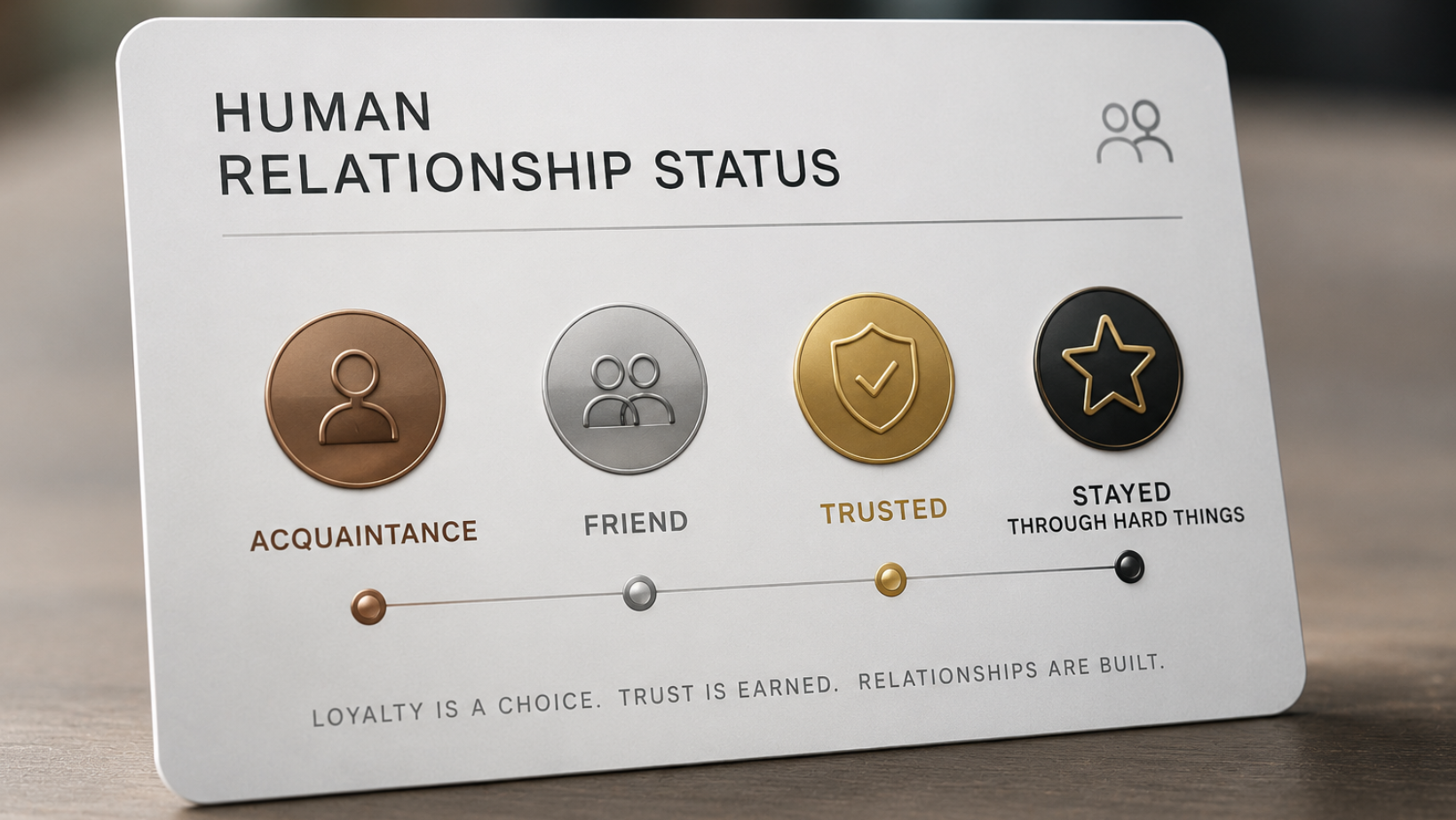
Is Loyalty Becoming a Lost Value?
Loyalty isn't blind obedience or staying at any cost. It's choosing to remain engaged with people who have earned your trust, especially when life gets difficult.

Silver Status: What Airlines Understand About Customers That Most Small Businesses Don't
I used to have Air Canada's highest status. Now I fly once a year, and I feel every inch of the downgrade.
Here's the thing though, I know exactly why it happened. And that's the part most businesses get wrong when they finally get serious about treating customers differently.
Segmentation isn't about who you shut out. It's about being honest about where your value actually sits, and consistent about what each level of relationship gets.
A simple 5-step process to start segmenting your customers, and why the airline industry has understood this longer than almost anyone.

The Question That Saved Ford, and the One I Had to Ask Myself First
A little over two years ago, I stopped running.
Recently, I decided to train for a half marathon and quickly realized something uncomfortable: ambition doesn't eliminate reality. Before I could move forward, I had to honestly assess where I was starting from.
Organizations face the same challenge.
Alan Mulally discovered it when he arrived at Ford and found a leadership team reporting green dashboards while the company was losing billions. The turnaround didn't begin with strategy. It began when someone finally felt safe enough to tell the truth.
The gap between what your organization knows and what it will say out loud is where every stall begins.

The Seven Principles Behind Every Successful Turnaround
You know something is wrong. You're working harder than you ever have. And the needle is barely moving. Here are the seven principles behind every major business turnaround of the last thirty years, and the one question each one asks of you.

I Was the One Being Replaced. Here's What Was Built Because of It.
A few years ago, I stepped into a role with a clear mandate, relocated my family, and accepted the challenge with confidence. After years of frustration, I was the one being replaced. This is what I learned from that, and what I built because of it.

You didn’t take on a job. You took on a Legacy.
You're walking into the building on your first day. The name on the outside — attached to every product, every invoice, every customer relationship — belongs to someone else. A founder. A family. A legacy that predates you by decades.
And they chose you.
Whether you're the next generation of a family business or an outsider brought in because the family recognized something they couldn't provide from the inside anymore; the moment you walk through that door, you become the custodian of something that matters deeply to people who were here long before you arrived.
You didn't just take a job. You took on a legacy.
And somewhere in that building, the elephant is already waiting.

I pulled off the highway in rural Quebec. What I heard changed everything.
I pulled off the highway in rural Quebec to take a mandatory company call. What I heard changed everything; and shaped how I think about brand, culture, and leadership to this day. New article up.

When "Stay In Your Lane" Becomes The Bottleneck
"Stay in your lane" sounds like focus. Sometimes it's just control wearing a polo shirt.
The latest Leadership In Focus blog breaks down how rigid lane management quietly becomes the bottleneck — and what to watch for before your silos start eating each other.
New post is live.

Poppi built a brand on one brutally clear sentence.
Poppi didn’t win because they “did marketing better.”
They won because they built a brand that knew exactly who it was, and let that truth drive every decision.
This isn’t a soda story.
It’s a leadership and culture case study on what happens when alignment creates speed.

The $9B Language Empire That Guilt-Tripped Its Way Into Our Hearts
The $9B Owl That Outsmarted Corporate Culture 🦉
Most companies chase users. Duolingo built believers.
Behind the memes and guilt-trip notifications lies a masterclass in BrandTruth Alignment™, where leadership, culture, and brand all tell the same story.
Read this week’s edition of Leadership In Focus: “The $9B Language Empire That Guilt-Tripped Its Way Into Our Hearts.”

The Brand Rejection Model: How Loyal Customers Slip Away (and How to Stop It)
The reverse gear of brand adoption? It’s called the Brand Rejection Model.
5 steps where trust erodes, loyalty fades, and customers walk away.
The good news? Each step is a chance to course-correct before it’s too late.
👉 Read the breakdown + fixes here
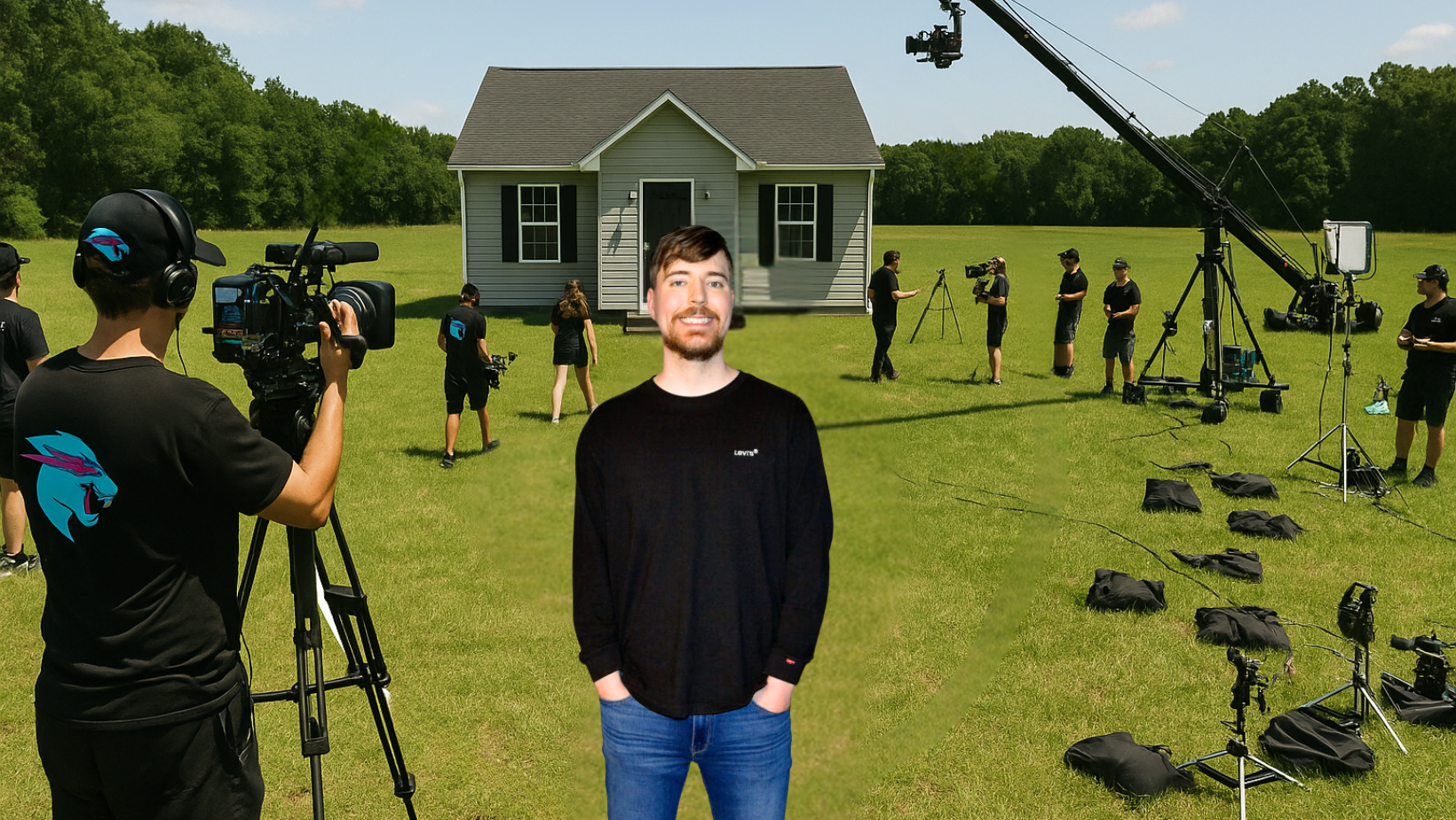
MrBeast is doing what most Fortune 500s still can’t figure out.
Most Fortune 500s still can’t figure this out.
MrBeast has built an empire—content, chocolate, burgers, philanthropy—without breaking the thing that makes it work: alignment.
When brand, culture, and leadership point in the same direction, growth isn’t just possible—it’s inevitable.

How Culture, Brand, and Leadership Turned a Canned Water Company Into a $1.4 Billion Force
Water that murders your thirst.
A brand built like a metal band.
And a $1.4B valuation later...
Liquid Death is more than clever packaging.
It’s a masterclass in what happens when leadership, culture, and brand all say the same thing.
This week, we break it down:
💀 How to build culture without corporate sludge
🎯 Why testing your idea before you build it matters
🧠 What BrandTruth alignment really looks like in the wild

Stop Fighting Each Other. Start Fighting the Problem.
When tension rises, teams turn on each other.
But what if you turned all that energy toward the real issue instead?
This week, Curtis shares a powerful reframe that turns conflict into collaboration.
💥 Less “me vs. you.”
⚒ More “us vs. the problem.”