
Realizing how much you don’t know
Recently, I had the opportunity to participate in the 51st Annual Learners & Leaders Conference at Mount Saint Vincent University, sharing the stage with some incredible leaders and engaging with the next generation of business professionals.
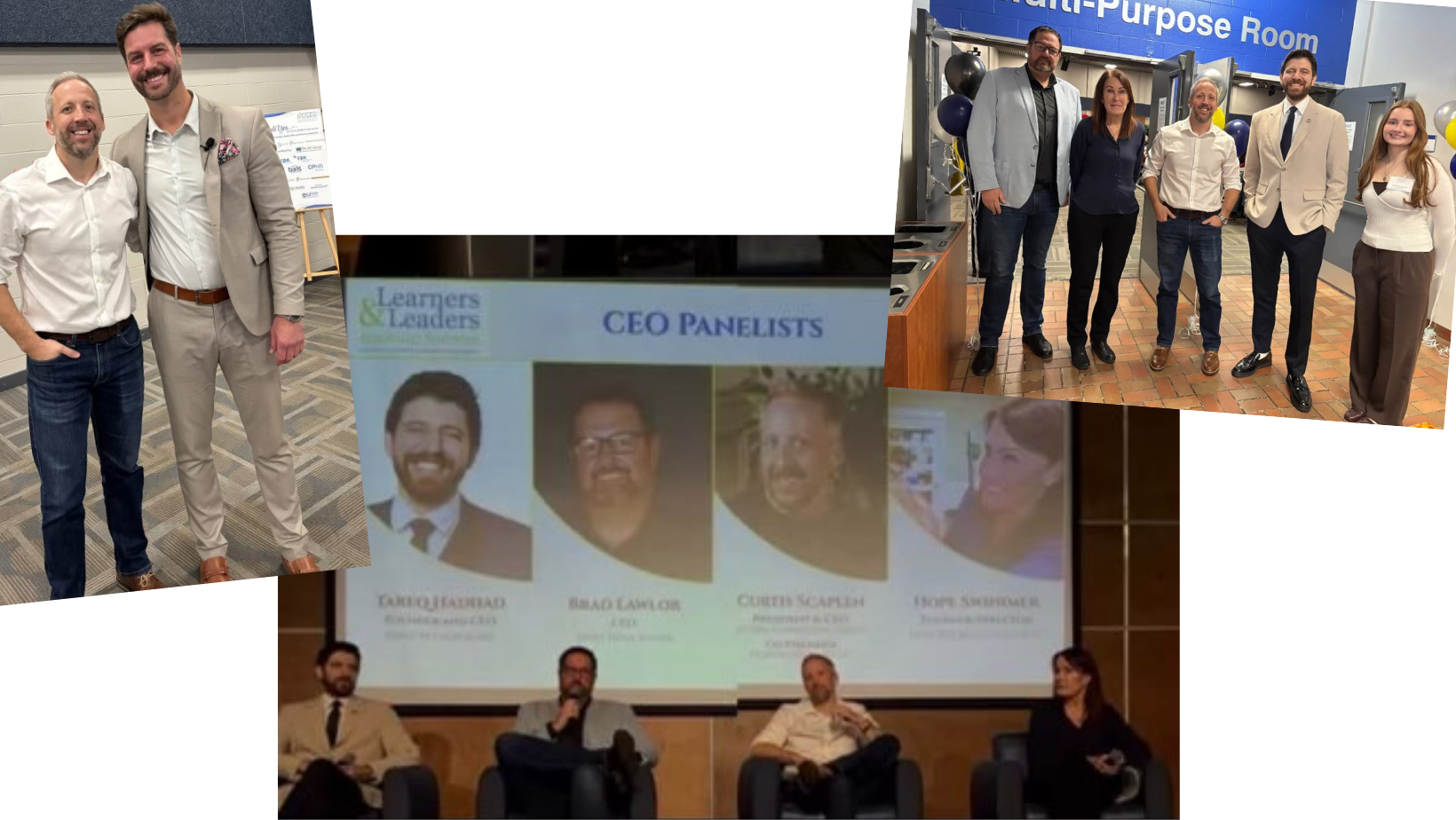
I always enjoy these opportunities. Not because I have all the answers, but because the conversations challenge me to reflect on what I've learned, what I believe and, perhaps more importantly, what I might still have wrong.
After more than 20 years working across industries, countries and organizations of all shapes and sizes, one thing I'm pretty confident about is this:
The more you learn, the more you realize how much you don't know.
We covered everything from changing workplace expectations and artificial intelligence to the future of business in Nova Scotia, leadership challenges and advice for the next generation.
A few thoughts have stuck with me.
1. The Fundamentals of Great Leadership Haven't Changed
There's a lot of conversation about how younger generations are changing the workplace.
They want flexibility, purpose, meaningful work and opportunities to grow.
My perspective? The best organizations have been creating these environments for years.
People want to feel safe, seen, heard and valued. They want to understand why their work matters and how they contribute to something bigger than themselves.
That isn't a generational issue. It's a human one.
I'm also not a big believer in the traditional concept of work-life balance. In fact, I think it's BS.
Our personal and professional lives aren't separate compartments that we somehow need to divide equally. They're connected, and they influence each other every day.
I prefer to think about integration and intentional living.
From an organizational perspective, that means creating clarity around what success looks like, giving people the flexibility to achieve it and measuring outcomes rather than hours.
It also means getting to know your people.
Not just when something goes wrong.
Create an environment where people can be authentically themselves, bring their ideas forward and feel like their contribution matters.
We hire people for their capabilities. We get the best out of them when we allow their authenticity and creativity to come alive.
There's also responsibility on both sides. Experienced leaders need to be open to fresh perspectives, and emerging leaders need to recognize the value of experience.
A little less ego and a lot more curiosity would serve everyone well.
2. One of Our Biggest Challenges Could Be Our Greatest Opportunity
One of the topics I was particularly excited to discuss was the estimated $2 trillion in Canadian business assets expected to transition over the coming decade.
That's a staggering amount of value.
But behind those numbers are real people, businesses and communities.
Owners who have spent decades building something meaningful. Some are approaching retirement. Others are exhausted, feeling stuck or unsure what comes next.
Many have built great businesses but haven't necessarily built businesses that can thrive without them.
Now think about the next generation.
Young professionals and entrepreneurs are entering the workforce with energy, ideas, new capabilities and a desire to make an impact.
What if we got more intentional about connecting these two groups?
Imagine a graduate joining an established local business, learning directly from an experienced entrepreneur while bringing new perspectives, technology and energy to the organization.
Perhaps that graduate eventually becomes a leader, earns equity or even takes over the business.
Instead of watching viable businesses close because there's no succession plan, we create opportunities for the next generation to build on what already exists.
That's exciting to me.
It's also a big part of why we focus on building more valuable businesses through Leadership In Focus.
Business value isn't just about preparing to sell. It's about creating options for growth, succession, ownership and the people who will carry those businesses forward.
There's a tremendous opportunity here if we're prepared to think differently and take action.
3. You're Probably Not Afraid of Failing
One of the questions I was asked was what advice I would give my younger self.
My answer was pretty simple.
"You're not afraid of failing. You're afraid of what it looks like to others if you fail."
Think about that for a moment.
How many decisions have we avoided because we were worried about what other people might think?
What if it doesn't work?
What if I look foolish?
What if people judge me?
What if I have to admit I was wrong?
I've certainly been guilty of it.
There was a period in my life when almost everything I thought I had figured out started to change. My marriage was ending, my mom was diagnosed with terminal cancer, and I had recently gone out on my own in business just as COVID was turning the world upside down.
I was scared. Personally, professionally and financially, I wasn't sure what came next.
For someone who had spent much of his career helping organizations navigate change, I suddenly found myself having to figure out how to navigate my own.
I had to get really intentional about what mattered most to me. Not what others thought success should look like, or what I had spent years believing I was supposed to be chasing.
I needed to find my North Star.
For me, that was being a Dad.
It's my favourite job in the world, and I knew that whatever I did next, being present for my kids had to be front and centre.
That became my anchor. It didn't make the decisions easier, but it gave me clarity. I turned down opportunities that would have meant more money but less time with my kids. I started challenging the way I'd been living, what I'd been chasing and what I actually wanted my life to look like.
Looking back, I realized that some of my biggest fears weren't necessarily about failing. They were about letting go of the life I thought I was supposed to have, and what others might think if I did.
But those decisions also led to some of the most meaningful growth in my life.
I've learned that being scared doesn't mean you're making the wrong decision. Sometimes it means you're finally making one that matters.
One of the things I've said for years, and something people have quoted back to me many times, is:
"Be easy on yourself, but tough on your ego and excuses."
Give yourself permission to make mistakes. To learn. To not have everything figured out.
But don't let your ego or your excuses become the reason you stop moving forward.
There's a big difference between giving yourself grace and letting yourself off the hook.
4. Technology Is a Tool. People Are Still the Difference.
Of course, we couldn't have a conversation about the future of business without discussing artificial intelligence.
We use AI regularly in our own work for research, editing, challenging our thinking and creating efficiencies.
It's an incredible tool.
But that's exactly what it is. A tool.
It doesn't replace the importance of authentic human connection, relationships, judgment or trust.
My advice to emerging professionals is to become curious about how technology can make you more effective, not simply how it can do the work for you.
Use it to free up time for the things that create real value.
Ask better questions. Think critically. Build relationships. Understand people.
And remember, the quality of what you get out of these tools is heavily influenced by the quality of what you put into them.
Technology will continue to evolve.
Your ability to connect with people, think critically and create value will always matter.
5. Stop Trying to Have It All Figured Out
If there's one thing I hope the students took away from our conversation, it's that they have time.
You don't need to have your entire career mapped out.
You don't need the perfect job, the biggest paycheque or the most impressive title.
Be curious. Show up. Work hard. Ask questions.
Attach yourself to people who challenge you, teach you and genuinely want to see you grow.
Effort and attitude are still tremendous competitive advantages, and they're two things you have complete control over.
I've worked in global corporations, family businesses, start-ups and scale-ups. I've had successes, made mistakes and changed direction more than once.
Every experience has taught me something.
Some lessons were more expensive than others.
But they all contributed to who I am today.
And I'm still learning.
What We Do Next Matters
One of the lessons I often reinforce, whether I'm working with business owners, coaching sports or talking with my own kids, is that what we do next matters.
We can't change the last play.
We can learn from it. We can take accountability for it. We can make adjustments.
But we can't replay it.
The same is true in business and in life.
You won't always make the right decision. You won't always get the opportunity you wanted. Sometimes things will happen that you never saw coming.
The question is what you choose to do next.
You don't need to know exactly where you'll be in five or ten years.
You need to understand what matters to you, take ownership of the things you can control and be willing to make the next best decision.
Then do it again.
Be easy on yourself, but tough on your ego and excuses.
Keep learning. Keep showing up. Keep taking chances.
And when the last play doesn't go your way?
Make the next one count.