
What Happens When All Your Business Knowledge Walks Out the Door?

The Risk You Don’t See Until It’s Too Late
We were meeting with a prospective client, talking through their sales pipeline and processes.
Their sales leader had been in the industry for years, decades in-fact.
He was well respected.
Had deep relationships.
And he had a name that opened doors.
So we asked a simple question:
“If someone new joined the business tomorrow, could they repeat what your sales leader does to generate sales?”
There was a pause.
Then some uncomfortable honesty.
They knew the answer was not yet.
This isn’t a rare problem.
Here’s a question you could ask of anyone in your business:
“If xyz person were to leave tomorrow, would someone else be able to do their job? Would we know everything that they know?”
This knowledge silo gap shows up in small businesses and large organizations alike.
When Success Lives in Someone’s Head

Years ago, I was leading a large sales team during a major change initiative. We were trying to grow a new product category and get frontline retail staff genuinely engaged.
As I worked with different reps, I noticed something familiar:
Everyone had their own way of doing things.
The top performers were clearly successful, but most struggled to articulate why. They couldn’t explain what they did differently beyond instinct and experience.
Except one.
The Power of a Repeatable Process
I spent a day in the field with a rep who covered a mostly rural territory. Over breakfast, he walked me through his approach.
There was no theory.
No cute gimmicks.
He had:
Spreadsheets.
Checklists.
Simple tools.
When we hit the stores, it clicked.
He started with fundamentals every time.
Asked the same core questions.
Worked through a consistent sequence.
Store staff weren’t surprised by his visits. They expected them. His process had become dependable.
What stood out wasn’t just his results, it was that he could clearly explain the what, why, and how.
At our next regional meeting, we shared his process.
Several reps adopted it.
Some resisted and stuck to “their way.”
But performance started to lift, because success was no longer trapped in one person’s head.
Why This Matters for Small Business Owners
If you’re a small-to-medium business owner thinking about growth, or eventual exit, this is one of the most overlooked drivers of value.
Documented, repeatable processes, which:
Reduces risk
Increases scalability
Lowers dependency on individuals
Makes your business easier to step back from
Founders often carry everything themselves. But when too much lives in your head, the workload gets heavier, and buyers notice.
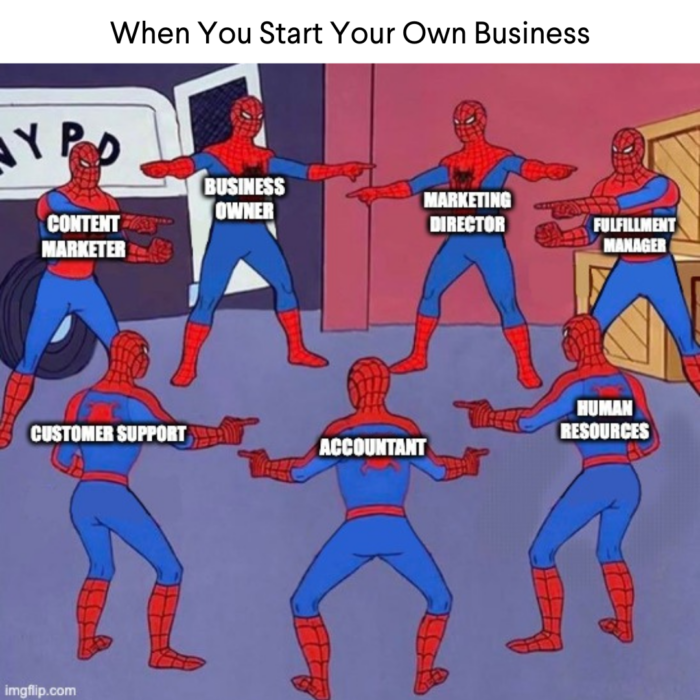
A business that only works because of you is fragile.
A Simple Process You Can Start With (Sales Example)
Let’s say you run a boutique real estate firm with a learning culture and agents who specialize in serving specific communities.
Start here:
Capture the best process
Sit with your top agents and map their steps from first contact to close.
Focus on actions, not personality.Document the fundamentals
• How do leads get qualified?
• What questions are always asked?
• What happens before, during, and after a showing?Pressure-test for repeatability
Ask: Could a capable new hire follow this and get 80% of the results?
Two AI Prompts to Help You Do This Faster
Prompt #1: Process Extraction
“Here’s a rough description of how our top agent runs their sales process.
Please organize this into a clear, step-by-step workflow with decision points and key actions.”
Prompt #2: Stress Test for Scalability
“Review this sales process and identify where it relies too heavily on individual experience or intuition.
Suggest ways to make it more repeatable for new team members.”
The Bigger Picture
What mattered in that real estate example wasn’t the industry.
It was the discipline.
We didn’t try to invent a “perfect” sales methodology.
We simply took what already worked for a few people and made it visible, testable, and transferable.
That same approach applies whether you’re selling:
Real estate
Professional services
B2B software
Manufacturing
Or anything in between
The goal isn’t to script people into robots.
It’s to remove guesswork.
Once the fundamentals are mapped:
New hires ramp faster
Managers coach to something concrete
Performance discussions get clearer
And success stops being mysterious
By using AI in the evaluation, we can more quickly:
Organize what your best people already do
Spot gaps and inconsistencies
Pressure-test whether a process can actually scale
In other words, it helps you turn tribal knowledge into shared knowledge.
That’s when a sales process stops being “how Jane does it”
and starts becoming “how we do it here.”
The Real Question
If someone new walked into your business tomorrow…
Would they know what “good” looks like?
Would they know what to do next?
Or would they need years of trial and error to get there?
Because the more your business depends on you, the heavier it gets.
And the more it depends on clear, shared processes, the more valuable it becomes.
