
Why Isn't Customer Data Enough?
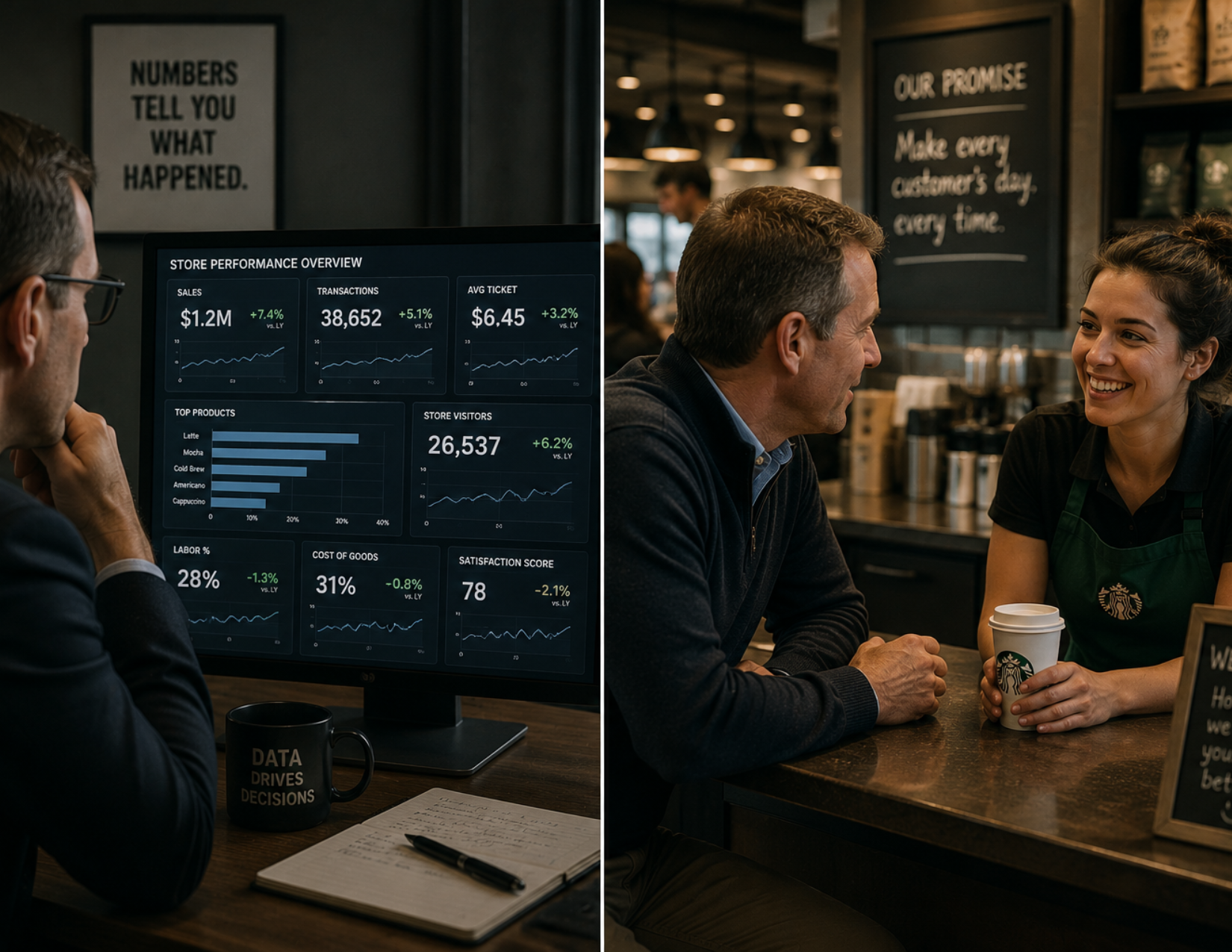
Every organization has more data on its customers than it's ever had. Satisfaction scores, NPS surveys, churn analytics, purchase histories, digital heat maps; the tools for measuring the customer experience have never been more sophisticated. And yet, somehow, plenty of organizations with excellent dashboards are still regularly surprised by what customers actually think, want, or are quietly planning to do next.
This data problem is a sequence problem.
Data tells you what happened. It tells you rates, averages, trends, and patterns across a population of customers. What it cannot tell you is the specific, textured, human reason behind any of those numbers: the frustration the customer didn't bother to name in the survey, the friction point they worked around so many times they stopped noticing it, the moment that almost made them leave that nobody at headquarters knows about because the frontline person who witnessed it had no channel to report it.
When Brian Niccol arrived at Starbucks as CEO, the company had no shortage of data. Customer satisfaction metrics, transaction volumes, mobile order performance, loyalty program analytics, all of it was available. What he did instead of starting with the numbers was go to the stores. He observed directly. He talked to baristas about what they were experiencing on a morning rush. He watched customers navigate the ordering experience with fresh, undefended eyes.
The diagnosis that followed Niccols’ tour was that the coffeehouse identity had been lost, that the experience had become impersonal and transactional, that the warmth that made Starbucks, Starbucks had quietly been optimized out of the operation. This insight didn't come from a dashboard. It came from being there. As the Reconnect to the Customer principle in the BrandTruth Alignment™ System puts it directly: the diagnosis came from being in the stores, not from the numbers. The sequence matters: look first, decide second.
Customer data is a lagging indicator. It tells you how customers scored an experience they already had. Direct customer contact, the kind that is messy, unscripted, and actually uncomfortable to conduct without a report to hide behind, gives you something data never can: the feeling of the gap between what you believe your customer experience is and what customers are actually living.
Research shows that companies in the top quartile of customer experience generate revenue growth two to seven times faster than their lower-performing peers, according to McKinsey. The organizations at the top of that range typically aren't the ones with the most sophisticated measurement systems. They're the ones where leaders spend time with customers regularly enough that no survey could surprise them, because they already know what the survey is going to say before it's run.
If you want to test where your own organization stands, answer this honestly: when was the last time a senior leader in your organization had a direct, unscripted conversation with a customer that wasn't part of a formal research process? If the answer is measured in quarters rather than weeks, your data infrastructure is probably telling you things you already believe rather than things you need to know.
Closing the gap between the customer experience you believe you deliver and the one customers are actually having is exactly the work we help leadership teams do at Leadership In Focus. If you'd like to talk through what that could look like for your organization, reach out to us at contact@leadershipinfocus.ca.
