
Why Does Accountability Fail?
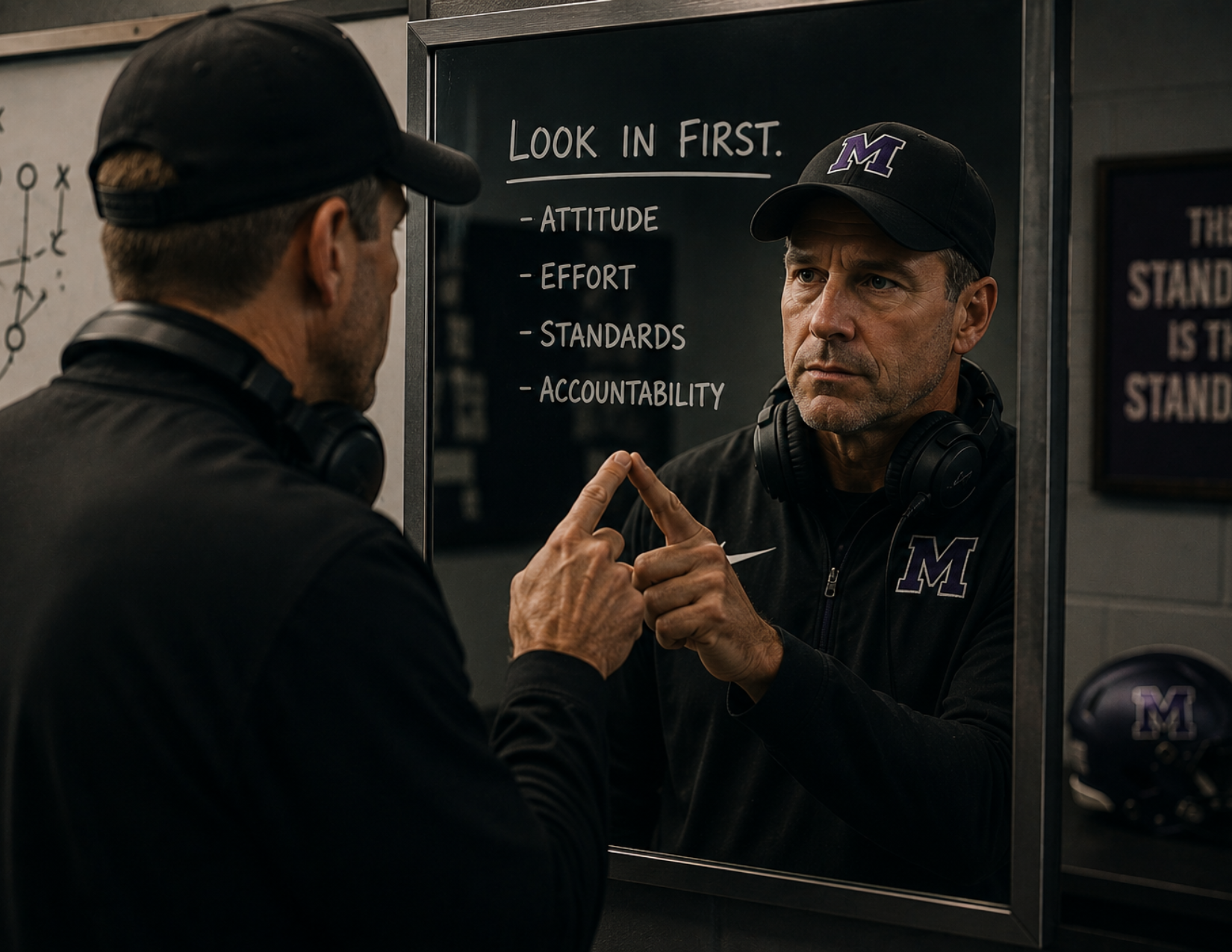
How many leaders don’t want accountability? None, of course. They want their team to own outcomes, follow through on commitments, and surface problems early, and then they're genuinely surprised when none of that happens consistently, as if accountability were a personality trait some people have and others don't, rather than something an organization either builds or doesn't. The challenge is that they lack a system for it.
Mike Macdonald, head coach of the Seattle Seahawks, described the actual mechanics of this in a story about a defensive collapse during his first year as a coordinator in Baltimore. His team blew a multiple-score fourth-quarter lead, and in the aftermath, he had a choice that every leader eventually faces: look for who on the roster underperformed, or look at the system he had built. He chose the harder option:
"I think the moral of the story was the feeling I had of our team, we lacked confidence... instead of pointing fingers, it just felt like, man, if we came in here and we start playing the blame game, not only is that not the right thing to do, but I don't think it's the right thing to do tactically either, because I think I'm really the common denominator here."
That single decision, naming himself as the starting point before naming anyone else, is the mechanism behind every functioning accountability system, and the thing missing from most broken ones.
When accountability fails almost everywhere, it fails for the same root reason: it gets treated as something leadership extracts from a team rather than something leadership demonstrates first. When a result goes wrong, the instinct is to ask who didn't deliver. The far more useful question, and the much less comfortable one, is what about the system made that failure possible, and did leadership own its part of that before asking anyone else to own theirs.
Macdonald has a phrase for this discipline: "through, not around." Problems get worked directly, with the people involved, rather than managed indirectly through blame, deflection, or quietly hoping the issue resolves itself. Crucially, he applies the same standard to himself that he expects from his players.
Describing how he handles a costly in-game mistake, MacDonald was explicit that the responsibility often traces back to coaching, not execution: if a player has shown he struggles with a particular assignment and gets put in that situation anyway, the failure belongs to the person who made that call, not the player who couldn't deliver on it.
This is precisely what Install Operating Discipline, inside the BrandTruth Alignment™ System, is built around. Alan Mulally's Business Plan Review at Ford worked for an almost identical reason. It was a structure where leaders surfaced their own red flags first and were met with collaboration instead of blame, which is the only condition under which people will keep surfacing problems honestly over time.
Accountability that only flows downward, where leadership demands it of the team but never demonstrates it themselves, doesn't fail occasionally. It fails by design, because everyone watching can tell the standard isn't actually shared.
If you want to know whether your organization's accountability problem is a people problem or a system problem, look at the last significant miss your team had. Ask honestly: did leadership examine its own role in that outcome before assigning responsibility elsewhere? If the answer is no, that's not a one-time oversight. It's very likely the actual reason accountability keeps failing, no matter how many times the expectation gets restated.
Building an accountability system that holds leadership to the same standard it asks of everyone else is exactly the kind of structural work we help organizations do at Leadership In Focus.
If you'd like to talk through what that could look like for your team, reach out to us at contact@leadershipinfocus.ca.
