
The Signals We Miss Until It’s Too Late
I locked eyes with him for barely a second.
Just a casual glance sideways as we drove. Two cars moving through traffic on a busy three-lane highway. A brief moment of eye contact, completely unremarkable. I thought nothing of it and kept driving.
A couple of minutes later, the car that had been beside me was now behind me.
I wondered if I'd cut him off somehow. Maybe he was in a hurry. I moved to the centre lane to let him pass.
He matched my lane change.
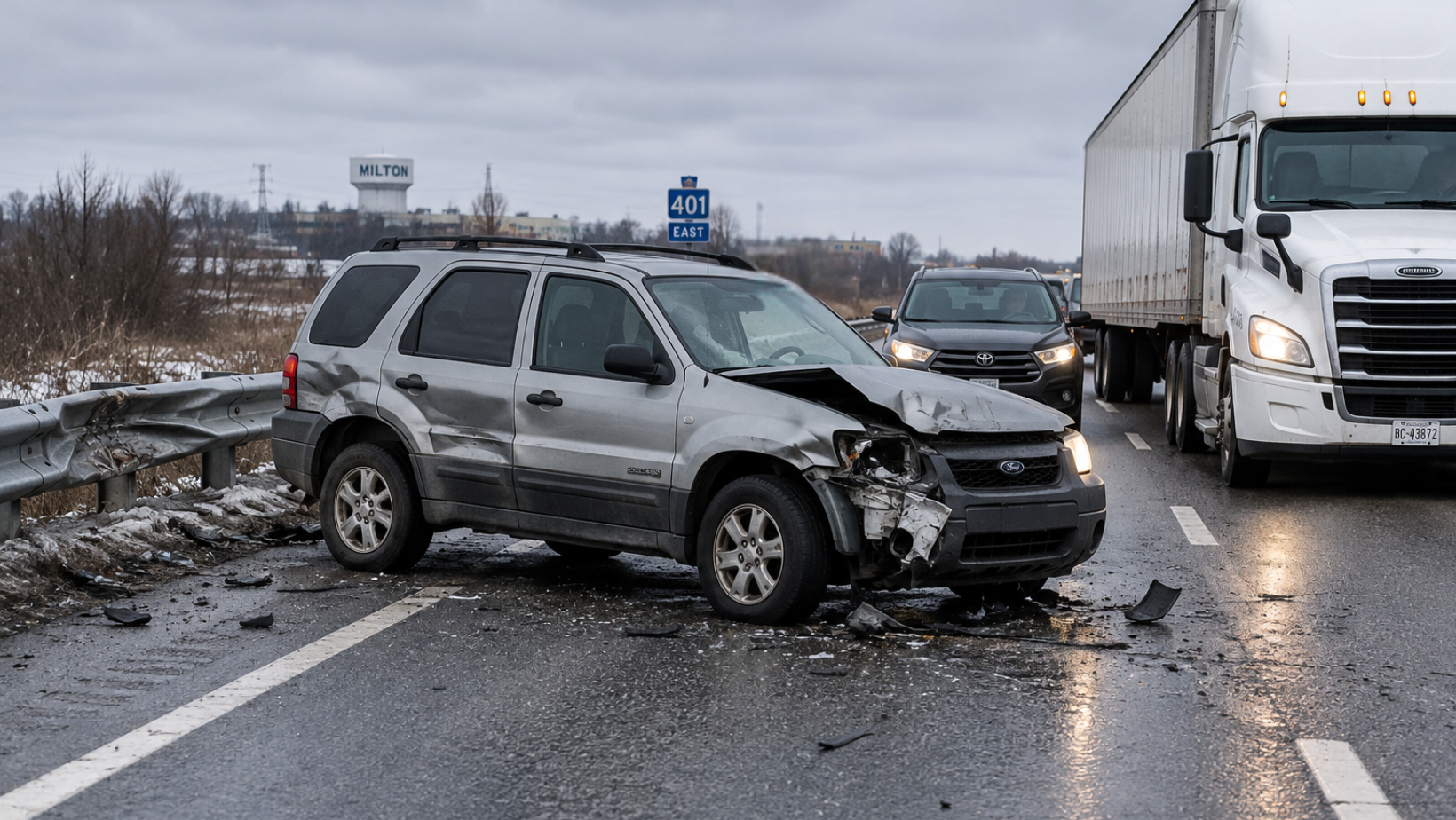
He crept up close. Still gesturing. Then, a bump. He rammed me. His small blue SUV had those black curved bars across the front, the kind that are, as I now understood, perfectly designed for exactly this. He backed off and accelerated again. Another hit.
My adrenaline was pumping. I was genuinely afraid. I could see in the rearview mirror that this was a very large man, and he was not done.
I reached shakily for my phone — this was before Bluetooth — and dialed 911. The operator listened, then told me it was an Ontario Provincial Police matter and transferred the call. The call disconnected.
I was supposed to be driving another 45 minutes to meet a customer. But I knew this stretch of highway. There was a police station near an upcoming exit, about 1.5 kilometres ahead. I moved to the right lane to set up for the exit.
That's when I saw him find the gap.
Brace for Impact
He accelerated hard toward the back left side of my vehicle. Full highway speed. The impact sent me veering toward the guardrail on the right side of the road. Time slowed. My vision narrowed. Beyond that guardrail was a steep drop to a valley below.
I braced for what I was certain was coming.
My vehicle hit the metal barrier. I fully expected to break through or launch over. I didn't. The car recoiled, spinning back out onto the highway, across two lanes of afternoon traffic on one of the busiest stretches of road in the country.
I came to a stop.
I looked left. A tractor trailer and another vehicle had managed to stop just before hitting me. Horns blaring. But stopped.
Two drivers pulled to the shoulder immediately and came over. One was a tow truck driver. Both had witnessed everything and had already called the police. Both were large men, and they told me they'd stay with me in case the driver tried to come back and finish what he'd started.
He didn't. He pulled onto the shoulder about 500 metres up the road and waited.
Much of what followed is a blur. I was eventually brought to the police station I'd been trying to reach. The driver was already there, in the custody of several officers outside the building. They explained to me that this person had experienced a mental break. He wasn't taking his medications. Something about that brief moment of eye contact had triggered something in him, and he had become completely consumed by it.
I still can't drive past that stretch of highway without thinking about it. About how close it came to going a very different way.
Colleagues Under Pressure
That event was probably one of the more visceral reminders I've had of the fragility of the human mind under pressure, and how little we can see of what someone else is carrying.
The man who rammed my car wasn't a villain. He was someone whose support system had completely broken down. Something had slipped. And in the absence of the right intervention at the right time, things had cascaded to a point where he lost control of it entirely; and it damaged his life and the lives of others in ways that didn't need to happen.
I think about that in the context of leadership more than people might expect.
The people on your team are driving beside you every day. And you genuinely don't know what some of them are carrying. Relationship difficulties. Family illness. Trouble with their kids. Financial pressure. Mental health struggles quietly compounding in the background. Substance use. Grief. Any of it, or all of it at once.
None of that excuses a drop in performance or a change in behaviour. Accountability doesn't disappear because life gets hard. But it does change how a leader responds when they notice something is off.
And noticing is the job.
Signals and Support
A leader’s job is not to pry, or play therapist. Not forcing someone to open up who isn't ready to. But keeping your radar attuned to the signals: the team member who's out of pattern, the person who's been quiet when they're usually engaged, the performance dip that doesn't have an obvious operational explanation.
When you see it, here's a way to approach it that holds both things at once, support and accountability:
Start with a simple, genuine check-in. This isn’t a performance conversation. It doesn’t have to be a formal meeting. Just: "I've noticed things seem a bit different lately, is there anything going on you'd want to share?" You're not demanding they open up. You're creating the space to do so if they choose.
Point to the resources, not the problem. Most organizations have Employee Assistance Programs: counselling, financial support, legal advice, mental health resources. You don't need to diagnose what's happening to say: "I want to make sure you know what's available to you." That offer shows you care, you notice, and you’re not heaping on a lecture.
Separate the person from the performance. You can acknowledge that someone is going through something real while also being clear that certain standards still need to be met. "I want to support you through this AND I need us to find a way to keep things on track together" is not a contradiction. It's leadership.
Help rebalance where you can, temporarily. If there's flexibility in how the work gets structured in the short term, use it. A brief accommodation isn't lowering the bar. It's buying the space for someone to stabilize so they can get back to the bar.
Respect privacy. Some people are intensely private and won't share anything regardless of how safe you make it feel. That's their right. The offer still matters. The door being open still matters. Don't push past where someone is willing to go.
And then follow through. If you said you'd check back in, check back in. If you pointed to a resource, ask a week later if they found it helpful. The follow-through is what separates a genuine leader from someone who asked the right question once and moved on.
Signals, Space, and Follow-Through
Several months after that day on the highway, the police called to let me know the case had been closed. The driver had been charged. I would not need to testify.
The relief was immediate. That possibility had been sitting quietly in the back of my mind - the prospect of reliving it in a courtroom, of facing him again - and having it resolved felt like setting something down I hadn't fully realized I was carrying.
But there was something else in that phone call that I didn't expect.
Sadness.
Not for what happened to me. I walked away from it. I was lucky in ways I don't take lightly.
But for him. For the fact that somewhere along the way, his support system had failed him. The people around him, the systems that should have caught the signals, the medication that wasn't being taken - somewhere in that chain, something broke down. And by the time it became visible, it was already too late to prevent the damage.
That's the version of this story I keep coming back to.
The part where someone slipped through the cracks that existed all around him, and nobody caught it in time.
Your team members won't ever reach that point. But they have their own version of pressure building quietly beneath the surface. And the leaders who create the conditions for people to say "I'm struggling,” before the struggling becomes something harder to come back from, are the ones who build teams that can actually hold together when things get hard.
Notice the signals. Create the space. Follow through.
Sometimes that's the whole job.
